
The 7th International Conference on Big Data, Artificial Intelligence and Internet of Things Engineering (ICBAIE 2026) Held Successfully
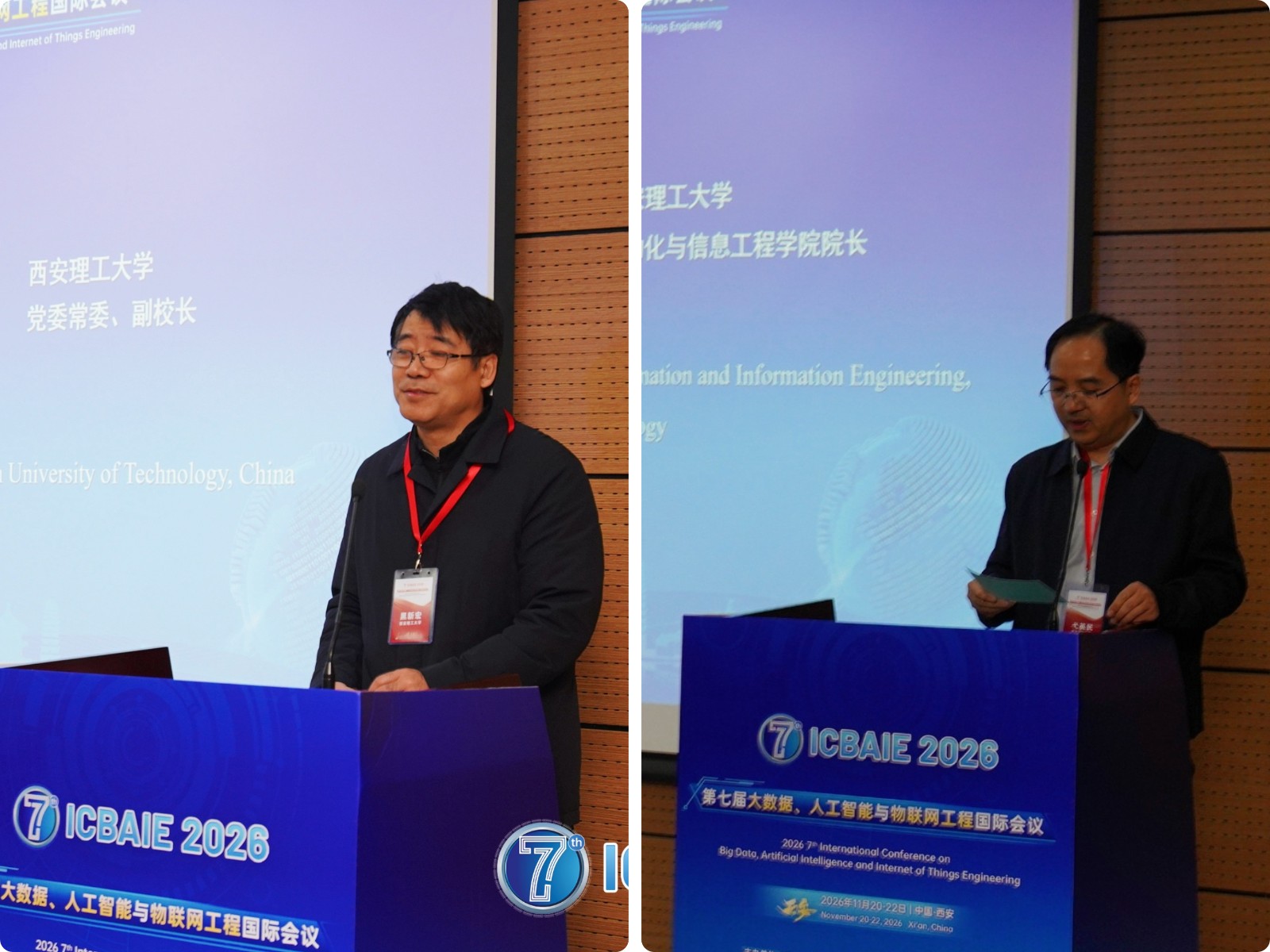
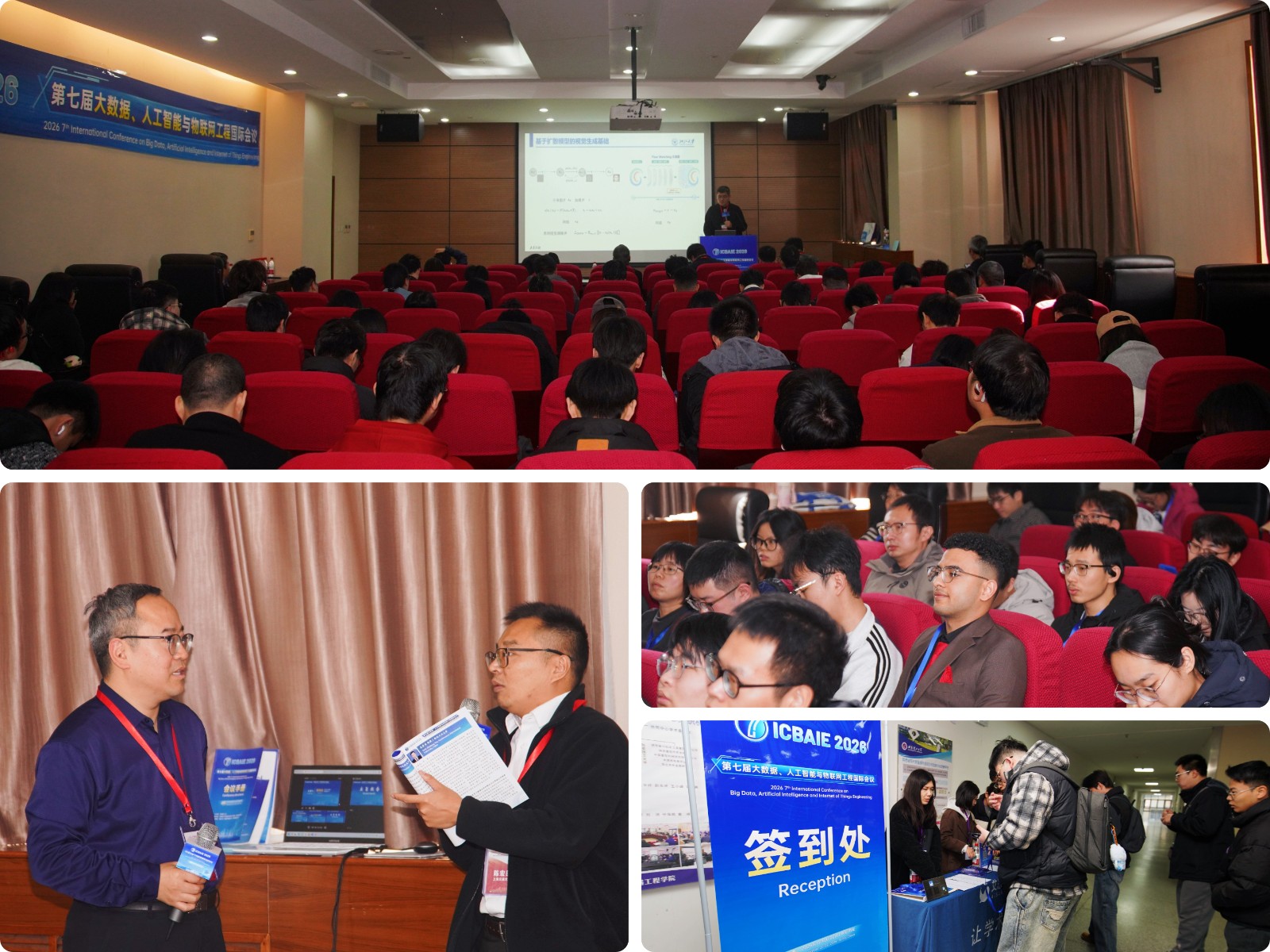
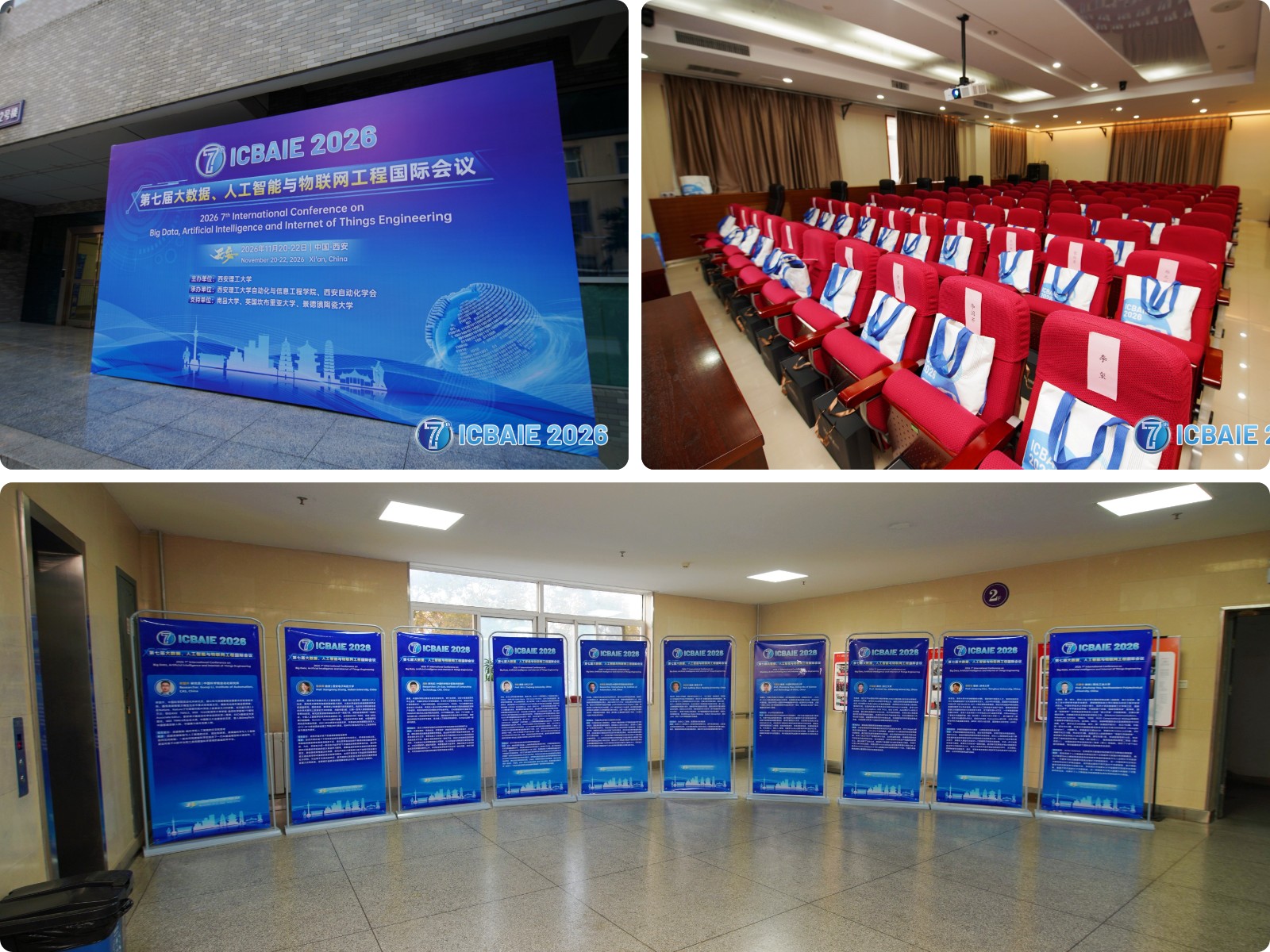
On November 21, 2026, The 7th International Conference on Big Data, Artificial Intelligence and Internet of Things Engineering (ICBAIE 2026) was held at Jinhua Campus of Xi’an University of Technology in Xi’an, Shaanxi Province. Hosted by Xi’an University of Technology, and undertaken by the School of Automation and Information Engineering of Xi’an University of Technology and Xi’an Automation Society, the conference received support from Nanchang University, University of Cumbria (UK) and Jingdezhen Ceramic University. Prof. Yingmin Yi, Dean of the School of Automation and Information Engineering, presided over the opening ceremony. Prof. Zheng Zhang, Young Chang‑Jiang Scholar from Harbin Institute of Technology (Shenzhen), Researcher Min Wang, Provincial‑level Young Talent from University of Electronic Science and Technology of China, Prof. Yuanshi Zheng, National Young Talent from Xidian University, Prof. Meng Zhang, Young Chang‑Jiang Scholar from Xi’an Jiaotong University, Assoc. Prof. Hongtian Chen, National Young Talent from Shanghai Jiao Tong University, Prof. Haibo Du, National Young Talent from Hefei University of Technology, hosted different sessions of keynote speeches respectively. After the group photo session, the keynote speech session officially commenced.
 |  |
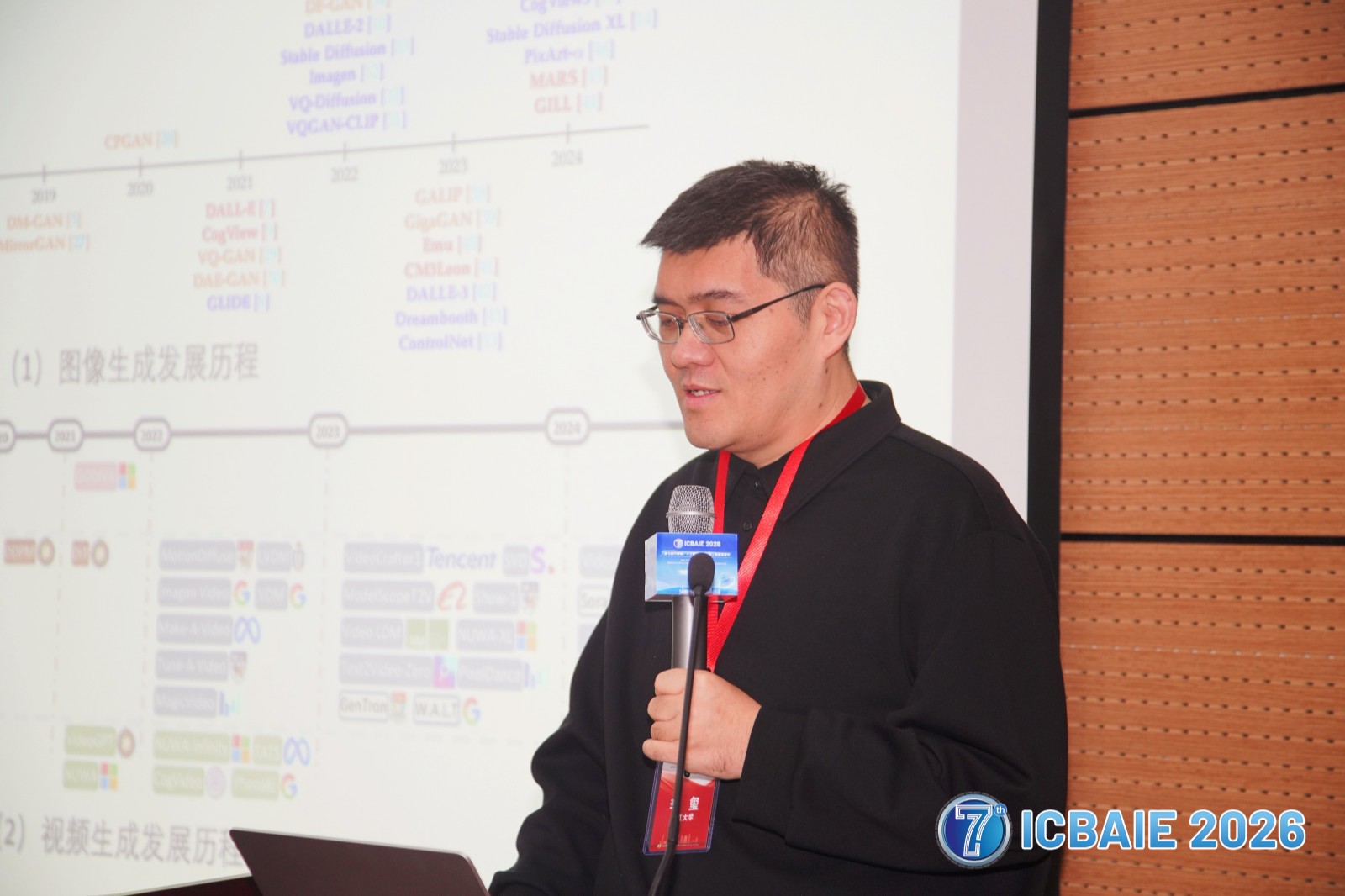
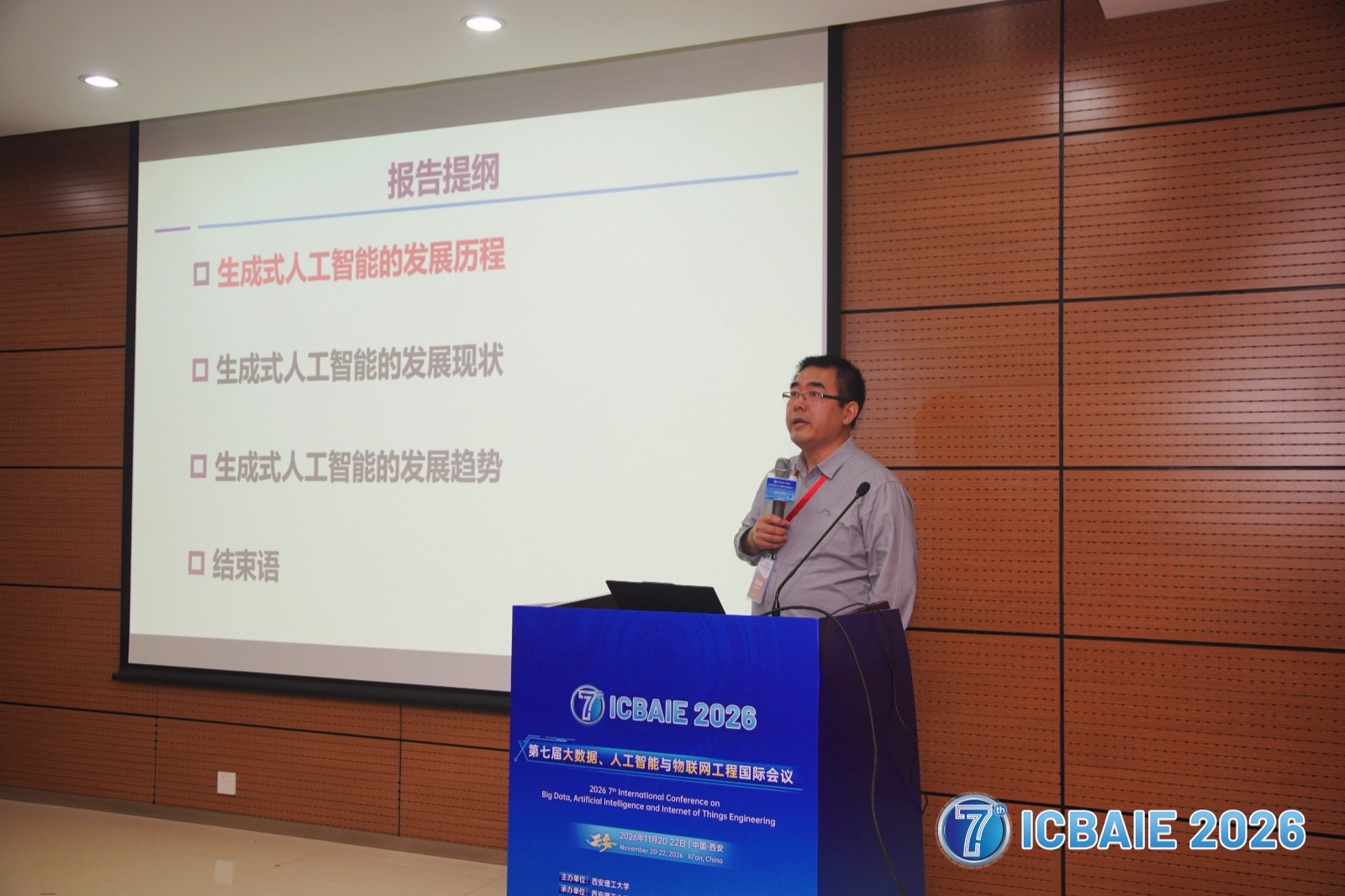
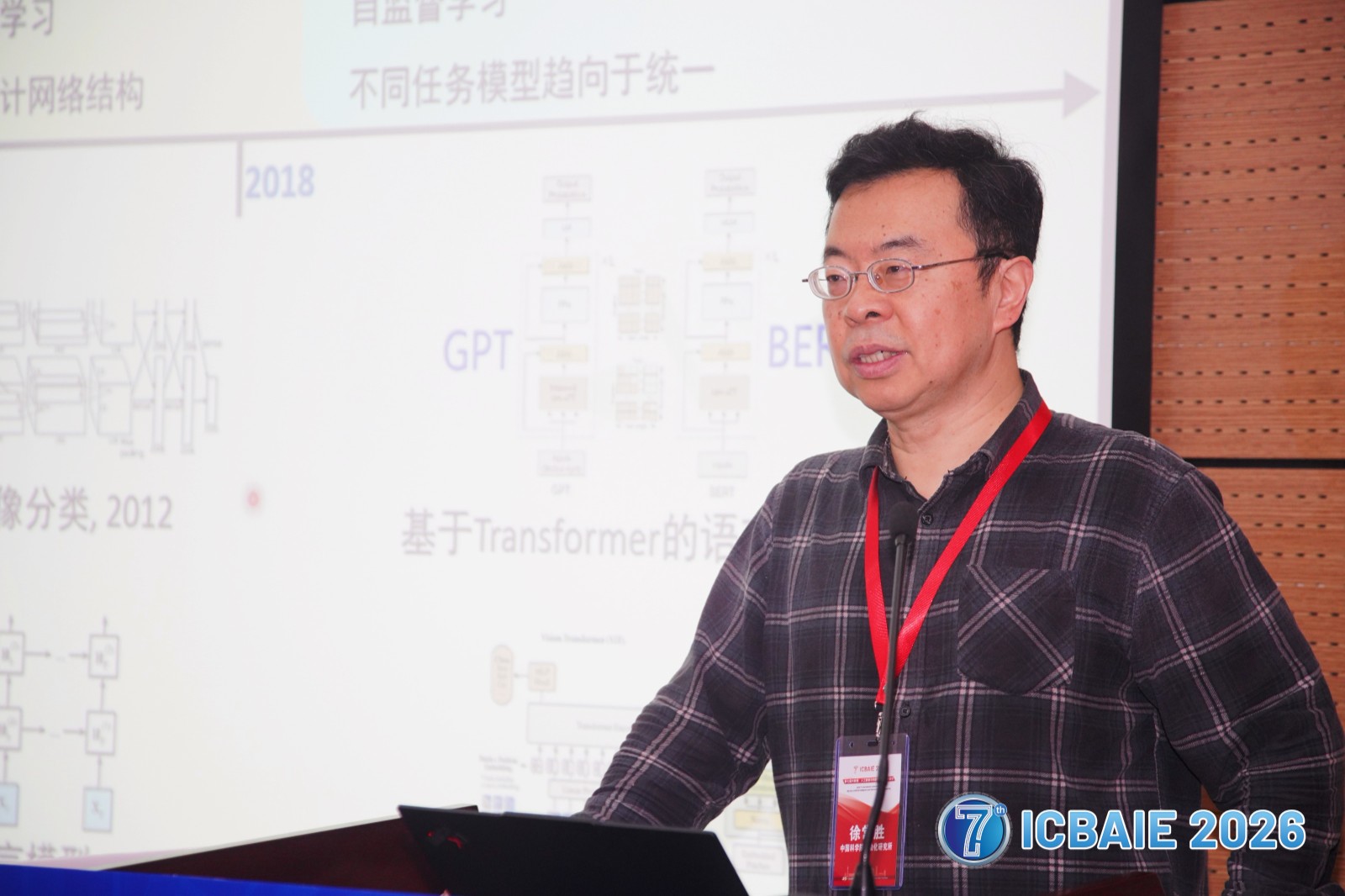
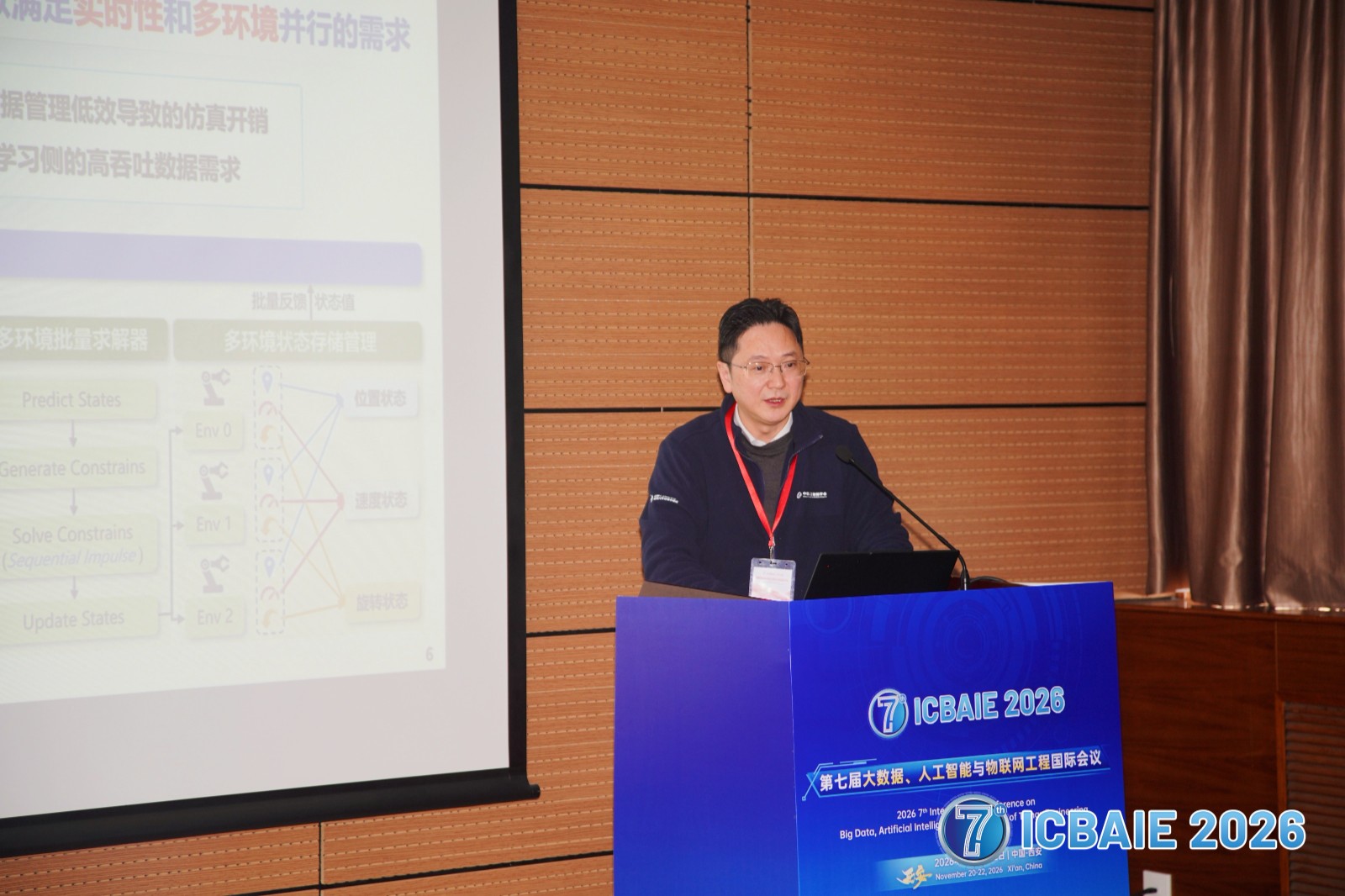
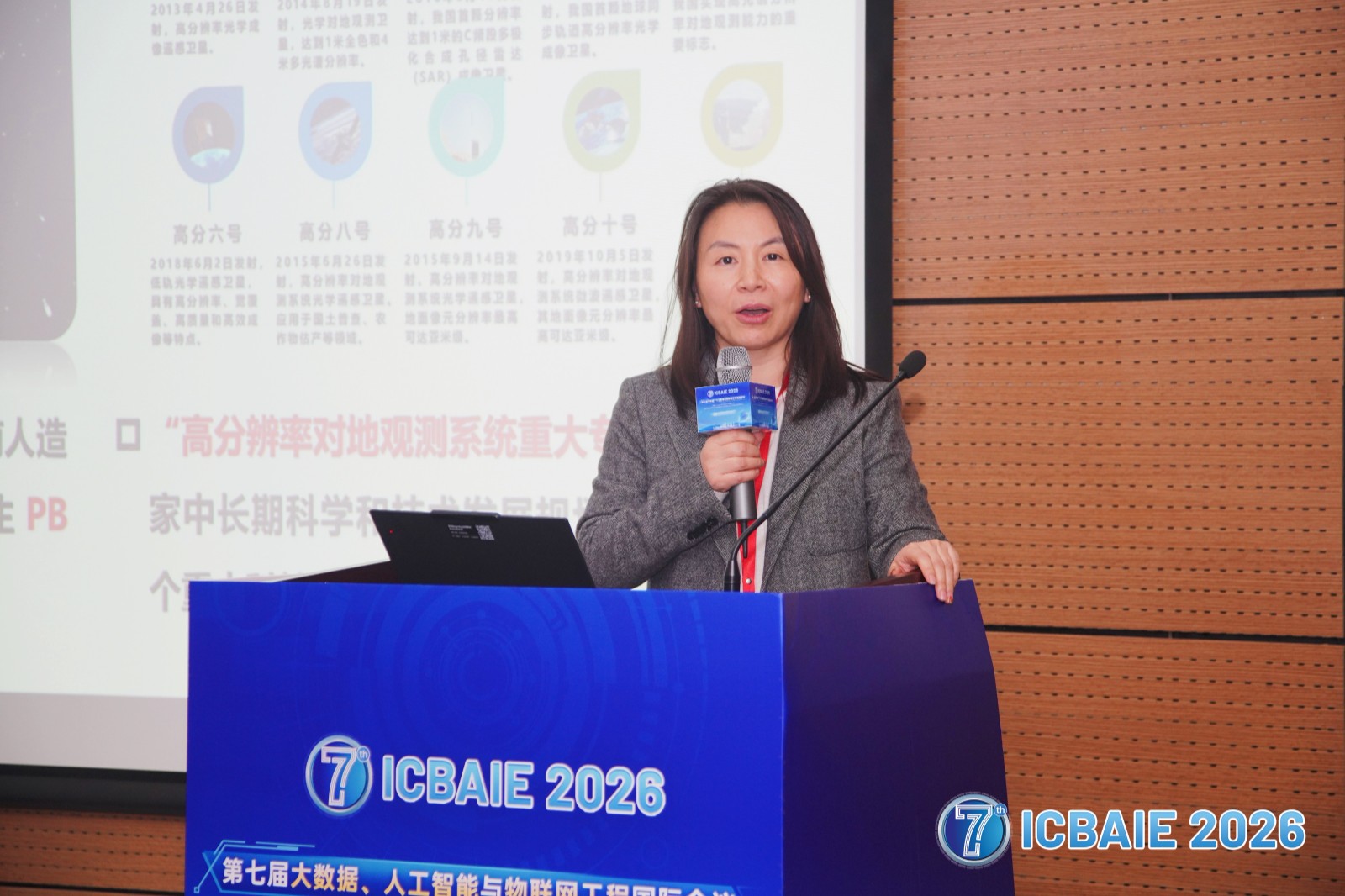
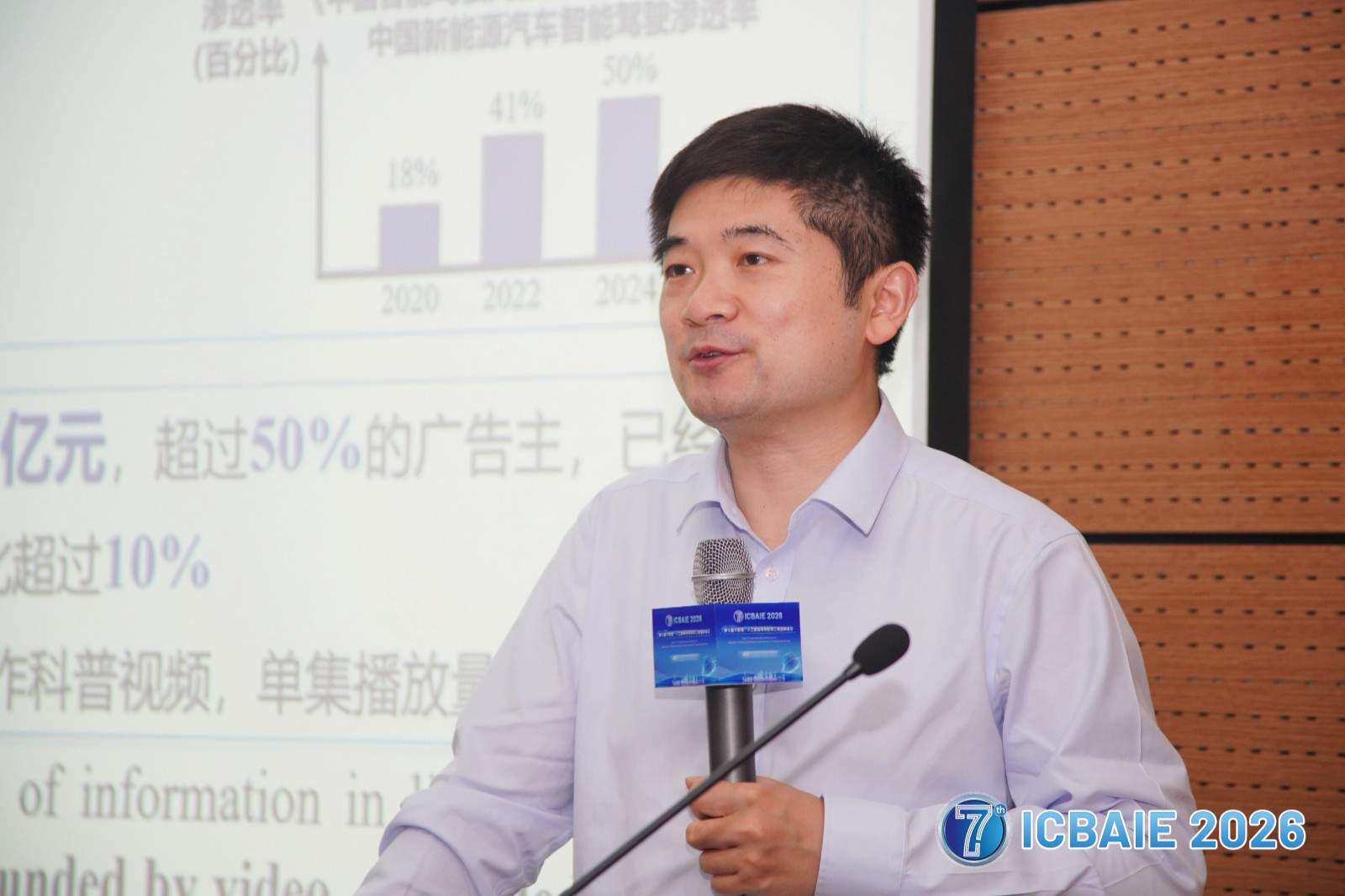
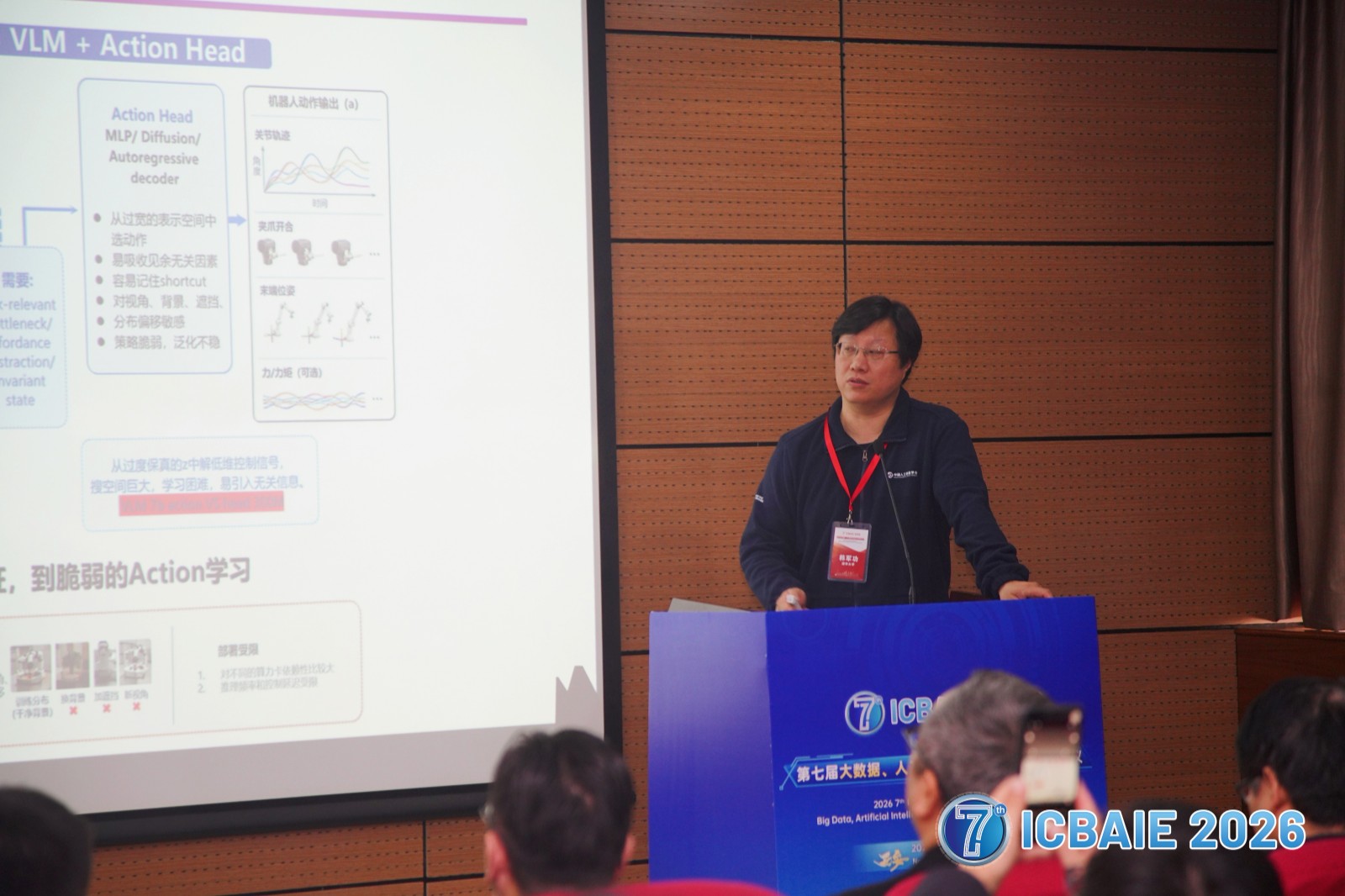
In the keynote session, Prof. Jungong Han, IAPR Fellow, National Overseas High‑level Talent from Tsinghua University, delivered the speech Paradigm Evolution of Multimodal Intelligence: From Disembodied Perception to Embodied Cognition. He reviewed the development of multimodal intelligence and discussed key technologies and challenges for AI evolving from disembodied perception to embodied cognition. Prof. Caifeng Shan, National Leading Talent from Nanjing University, presented Generative Artificial Intelligence: Development Status and Future Trends, systematically illustrating the history and state‑of‑the‑art of generative AI and analyzing its industry prospects. Prof. Weiwei Xu, Yangtze River Scholar from Zhejiang University, gave the report Efficient Reconstruction and Simulation Technologies for Embodied Intelligence, introducing complete infrastructure technologies including 3D reconstruction and parallel physical simulation for embodied‑intelligence scenarios. Researcher Changsheng Xu, National Distinguished Young Scholar, IEEE Fellow from Institute of Automation, CAS, talked about Research and Application of Multimodal Large‑scale Models in Open‑world Settings. He analyzed practical bottlenecks of multimodal large models under open‑world conditions and put forward solutions such as decoupled visual systems and cross‑domain few‑shot transfer. Prof. Yanjun Huang, Distinguished Yangtze River Scholar from Tongji University, presented Driving‑Skill‑Driven End‑to‑End Autonomous Driving, proposing a new end‑to‑end autonomous‑driving architecture built upon decomposable and combinable driving‑skill units. Prof. Xi Li, National Distinguished Young Scholar, IAPR Fellow from Zhejiang University, shared Image and Video World‑model Generation Based on Multimodal Representation, interpreting multimodal visual‑generation technologies and discussing core issues for constructing interactive world simulators.
|  |  |
 |  |  |
 |  |  |
 |  |  |
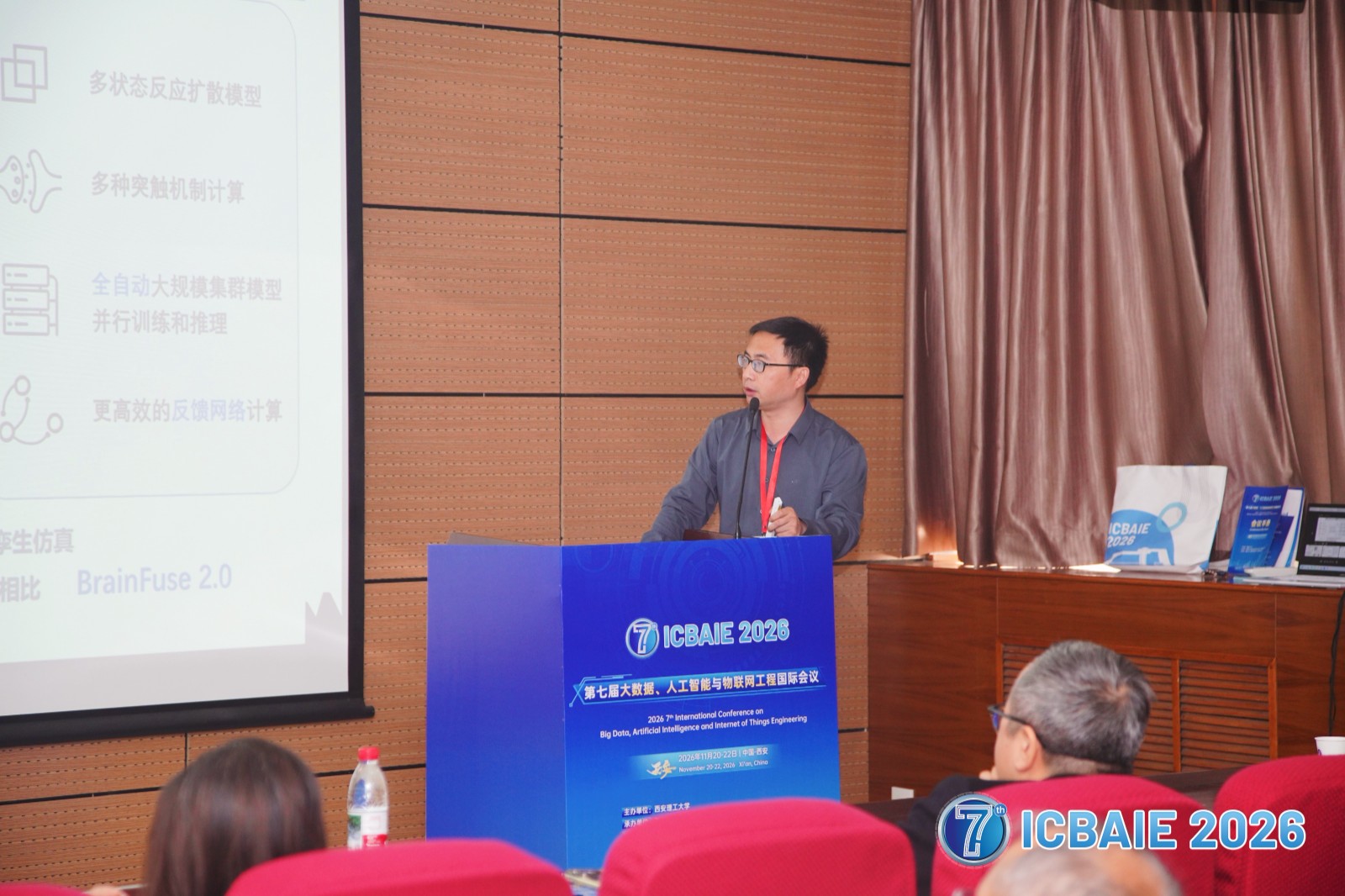
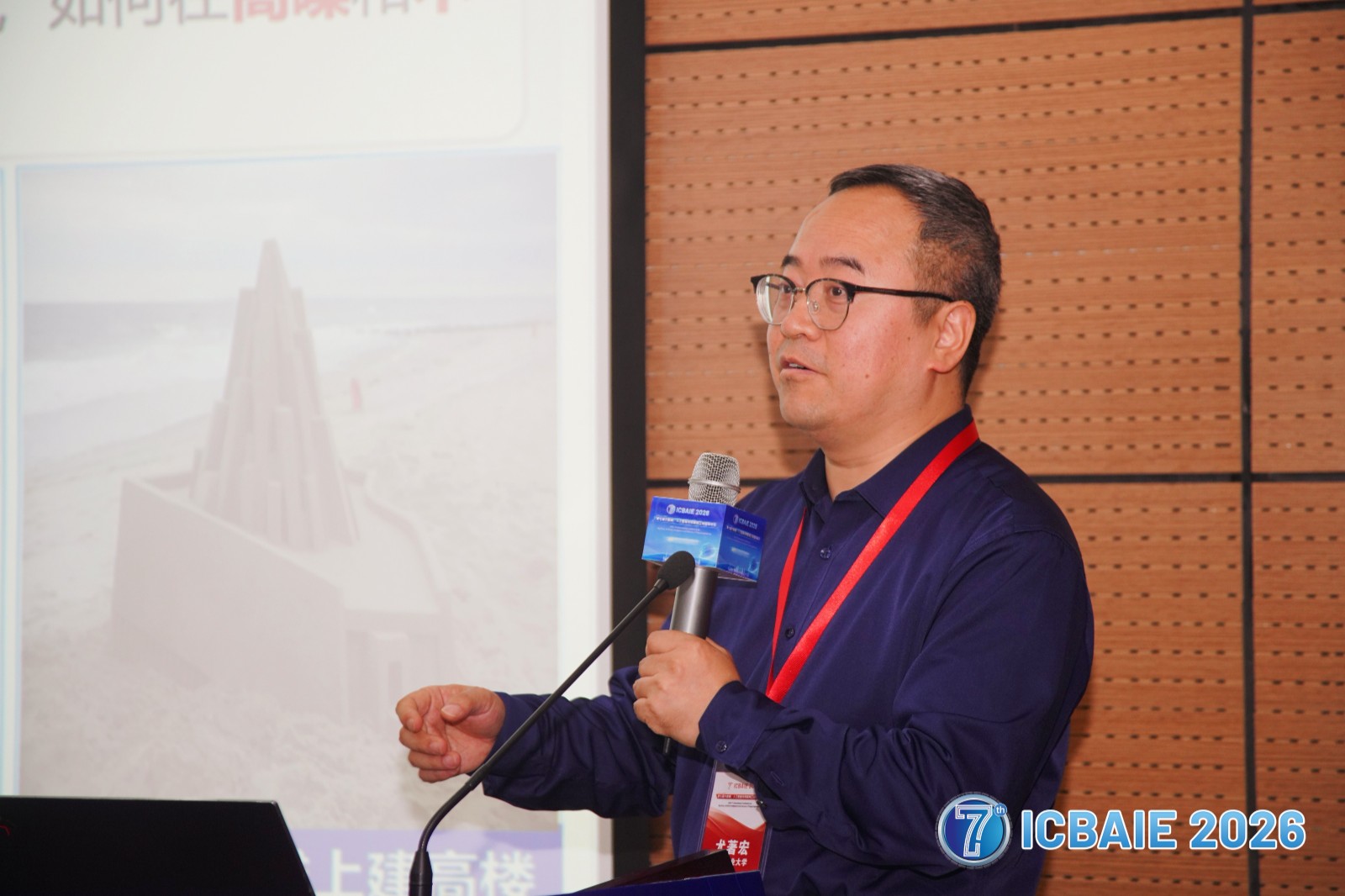
Researcher Guoqi Li, National Distinguished Young Scholar from Institute of Automation, CAS, presented Brain‑Inspired Intelligence: Intersection and Reflections between Brain Science and Artificial Intelligence, exploring approaches for mutual empowerment between brain science and AI. Prof. Zhuhong You, National Distinguished Young Scholar from Northwestern Polytechnical University, delivered AI for Science: New Paradigms and Cross‑domain Application Exploration of Biomedical Big‑data Analysis, introducing knowledge‑graph and large‑model‑driven mining methods for biomolecular associations. Prof. Xiangrong Zhang, National High‑level Talent from Xidian University, gave the report Intelligent Remote‑sensing Image Interpretation under Dynamic Open Environments. For complex open remote‑sensing scenarios, she proposed knowledge‑data co‑driven semantic representation learning and zero‑shot target‑interpretation frameworks. Assoc. Prof. Yukai Zhu, National Young Talent from Beihang University, presented Intelligent Maneuver Control of Spacecraft with Strong Disturbance Rejection, introducing key technologies including multi‑level anti‑disturbance attitude pointing and quantitative agile maneuver control for aerospace missions. Researcher Lin Gao, National Excellent Young Scholar from Institute of Computing Technology, CAS, delivered Dual‑engine‑driven Digital‑space Modeling via Explicit Geometric Representation and Implicit Generative Models. Combining explicit geometry and implicit generation, he discussed construction schemes for interactive digital worlds. Prof. Xiaofeng Liu, Dean of the School of Artificial Intelligence and Automation from Hohai University, talked about Emotional‑intelligence Interaction and Application of Embodied Companion Robots, introducing emotional‑intelligence technologies for companion robots and their application value in elderly care and rehabilitation from the dimensions of emotion perception, emotion generation and human‑robot interaction.
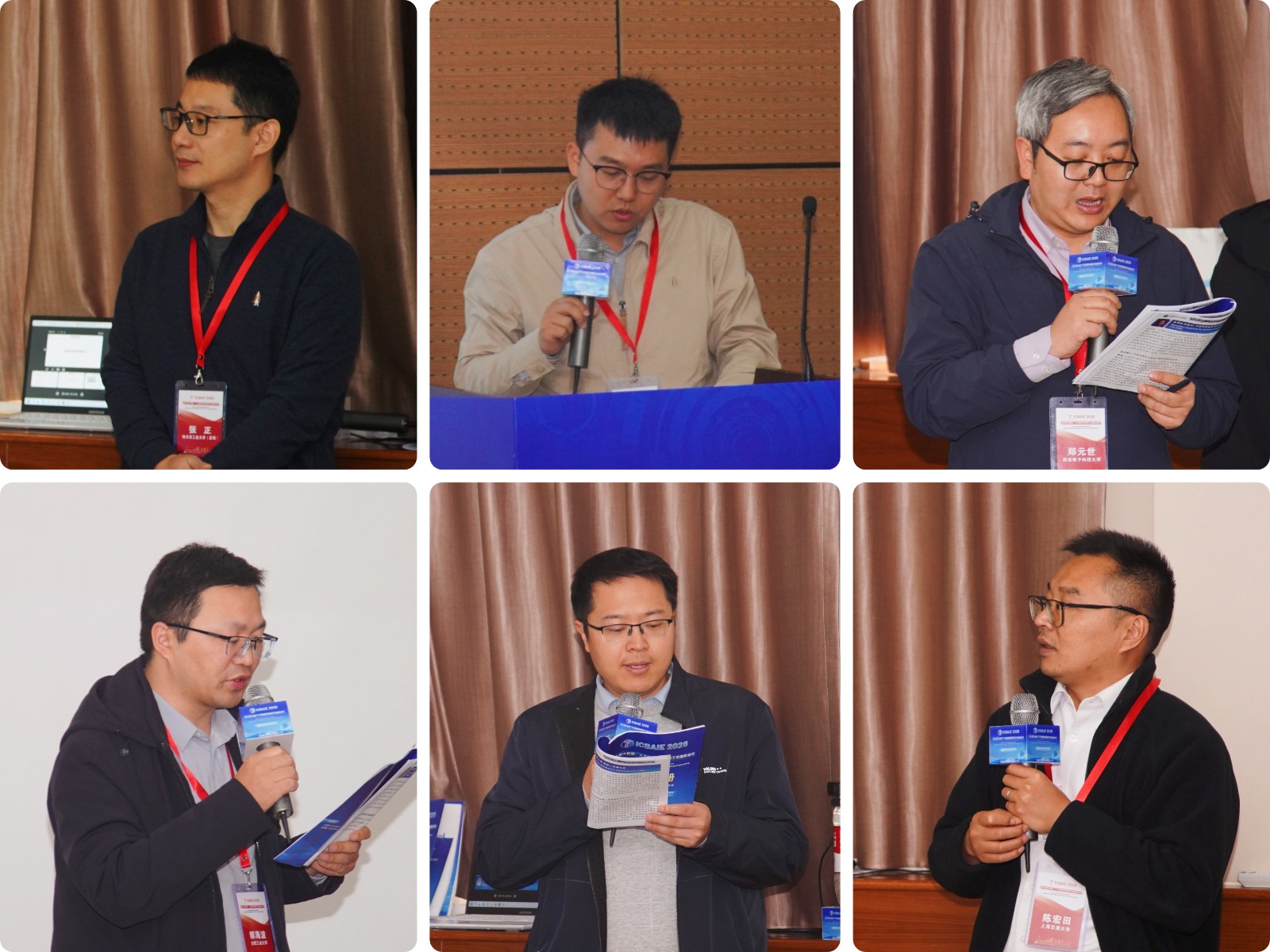
Subsequently, parallel in‑person and online oral sessions were arranged. Researchers from multiple domestic universities and research institutes shared their latest research outcomes on topics including transfer learning, time‑series compression, intelligent control, supply‑chain resilience, multimodal reasoning, federated‑learning incentive mechanisms and BeiDou‑based intelligent monitoring, covering multiple interdisciplinary frontiers such as big data, artificial intelligence, robot control and Internet of Things engineering. The closing ceremony was held after all presentations. The conference fully demonstrated cutting‑edge advances in big data, artificial intelligence and Internet of Things engineering, and built a valuable platform for in‑depth industry‑university‑research integration.

Looking ahead, ICBAIE will continuously gather global scientific‑research strengths and inject lasting momentum into technological innovation and achievement transformation in big data, artificial intelligence and Internet of Things engineering. We look forward to meeting you again at future ICBAIE conferences!
 |  |